
Hello, do you have any information on torque sensor selection and fabrication? If possible, please let me know.
Hi, you can inquire about purchasing one from Ray@Biomotum.com, use an off the shelf sensor (e.g., TRT-500 from Transducer Techniques, or try and make your own. The geometry of the torque sensor part was released in our wiki. You would then need to apply strain gauges and perform a validation experiment, or have it instrumented professionally. More info can be found here:
https://drive.google.com/file/d/1jnRyYYKg0S3nI_MOrljjOLp9YtcTnJgm/view?pli=1
@zfl3 Dear Professor Zachary Lerner,
I have read Greg Orekhov's doctoral dissertation "THE DESIGN, VALIDATION, AND PERFORMANCE EVALUATION OF AN UNTETHERED ANKLE EXOSKELETON" and studied the more detailed descriptions and finite element analysis of the torque sensor. I would like to inquire if the OpenExo team could share the CAD files of the mechanical structural components where the strain gauges are attached with enthusiastic DIY technical enthusiasts and users of OpenExo who are eager to engage more deeply. This would help achieve the goal stated in the paper "OpenExo: An open-source modular exoskeleton to augment human function": "Our hope is that OpenExo will accelerate the development and testing of new exoskeleton designs and control schemes while simultaneously encouraging others, including those who would have been turned away from entering the field, to explore new and unique research questions."
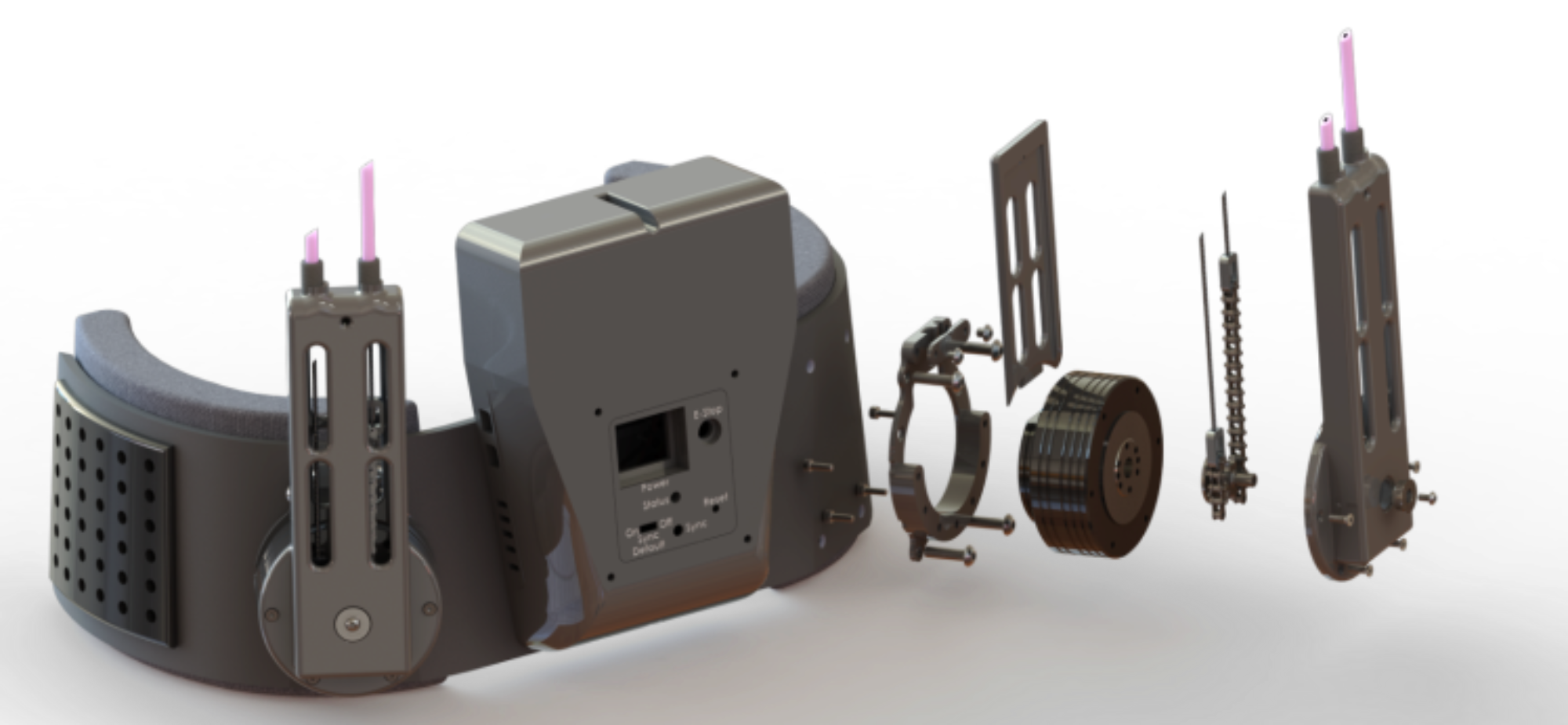
certainly, the file is included in this assembly:
https://drive.google.com/file/d/1yJPmcBYuSO0QmPSQr5ksVeqNGBRurwYB/view?usp=share_link
If you can't find it, someone from the team will post the exact file. it looks like the part pictured.
@zfl3 Fantastic! A huge thank you to Professor Zachary Lerner for open-sourcing and sharing these achievements. This effort and dedication will likely strip exoskeleton technology of its expensive, luxurious image, making it more accessible to benefit a greater number of people in need. I plan to DIY a full set of such equipment here in Hong Kong. Once I’ve tested, understood, and benefited from using it, I aim to support and promote more people like me in leveraging the open-source achievements of OpenExo to solve practical problems in their work and daily lives. This will help alleviate the burdens of those engaged in repetitive and strenuous labor, as well as support friends currently relying on expensive rehabilitation sessions at specialized institutions—enabling them to return to affordable, routine rehabilitation training at home.